

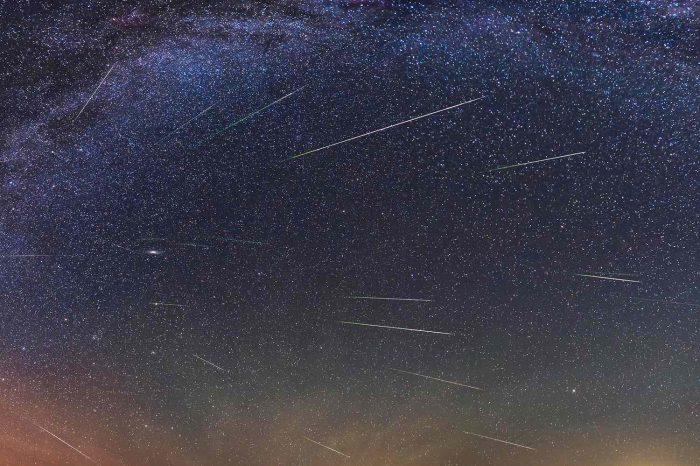
The Perseid Meteor Shower
The Perseid Meteor Shower peaks on the night of August 12 into the early morning of August 13. Widely considered the best meteor shower of the year, the Perseids bring fast, bright meteors that often leave long, colorful trails across the sky.
2026 Viewing Conditions
Conditions this year are exceptional. The peak coincides with a New Moon, meaning zero moonlight interference to wash out faint streaks. Under dark skies, expect to see anywhere from 50 to 90 meteors per hour.
• Best Time: Midnight through predawn hours (3:00 AM – 5:00 AM) when the radiant point in the northeast sky is highest.
• No Equipment Needed: Look up with the naked eye; telescopes and binoculars restrict your field of view too much. Give your eyes 20–30 minutes to adjust to the dark.
What to Bring / Essential Gear
To stay comfortable during hours of stargazing, especially in South Florida, make sure to pack the following:
• Bug Spray: Mosquitoes and noseeums are intense at night. High-DEET or Picaridin spray is essential, and treating long-sleeve clothing with permethrin provides extra protection.
• Reclining Lawn Chair or Blanket: Stargazing requires looking straight up for extended periods. A reclining camp chair prevents severe neck strain.
• Red-Light Flashlight or Headlamp: White light ruins your night vision, taking another 20 minutes to recover. Use a red light mode to navigate your setup.
• Water and Snacks: Dark sky spots often have no open facilities late at night.
• Light Long Sleeves and Pants: Helps protect against bug bites and keeps you comfortable outdoors.
Viewing Spots in Miami
Because city light pollution blocks out dimmer meteors, staying within central Miami limits will reduce how many shooting stars you see. However, if you want to stay strictly in or very close to Miami, here are the best options for localized viewing:
-
Bill Sadowski Park & Nature Center (Palmetto Bay): Located in southern Miami-Dade, this park is home to the Southern Cross Astronomical Society and offers significantly darker skies than central Miami.
-
Bill Baggs Cape Florida State Park (Key Biscayne): Positioned at the southern tip of Key Biscayne, this spot faces away from downtown light pollution and reduces mainland glow over the water.
-
Matheson Hammock Park & Marina (Coral Gables): Open areas along the bay offer wide horizon views facing east toward the ocean, where city lights are minimized.
-
Crandon Park (Key Biscayne): Beach areas facing east give you an open expanse over the Atlantic Ocean, away from direct streetlights.
(Note: For the absolute highest meteor count, taking a 45-minute drive west along Tamiami Trail into Big Cypress or south into Everglades National Park will offer much darker skies).